Complete a Staff Transition Plan
Complete a Staff Transition Plan
A staff transition plan is a proactive tool designed to ensure continuity in the event of a planned or unplanned staff vacancy. It captures essential information from the current staff member in that role, including day-to-day responsibilities, essential functions, key resources, systems, budgets, staff oversight, and other information needed for a temporary backup or permanent successor.
By documenting this critical knowledge, the staff transition plan helps minimize disruption to workflows, deadlines, and team priorities when a role shift occurs. It reduces organizational risk and supports a smoother, more informed handoff of duties.
The Staff Transition Plan should be completed by the current job incumbent because they are in the best position to document the day-to-day knowledge, responsibilities, and resources required for the role.
Why Use a Staff Transition Plan?
-
Ensures continuity of key duties and activities while safeguarding critical resources during staff transitions.
-
Documents critical elements not typically captured in standard job descriptions, such as:
-
- Participation in key meetings, committees, or initiatives
- Relationships with customers, partners, and knowledge-sharing networks
- Inventory of resources, protocols, or equipment managed
- Vendors, contracts, and service providers
-
Serves as a practical reference or “instruction manual” for interim or successor staff.
-
Preserves institutional knowledge and provides immediate access to essential operational details.
You can use these questions to help determine key duties and activities that will require coverage for continuity of staffing and operations.
-
What are your day-to-day responsibilities or ongoing duties?
-
What high-impact or cyclical deliverables are you responsible for?
-
What projects, protocols, or meetings would require immediate coverage during an absence?
-
Do you have any routine commitments that will require coverage if you leave the position—either temporarily or permanently?
-
What resources (e.g., tools, systems, vendors) are you responsible for managing?
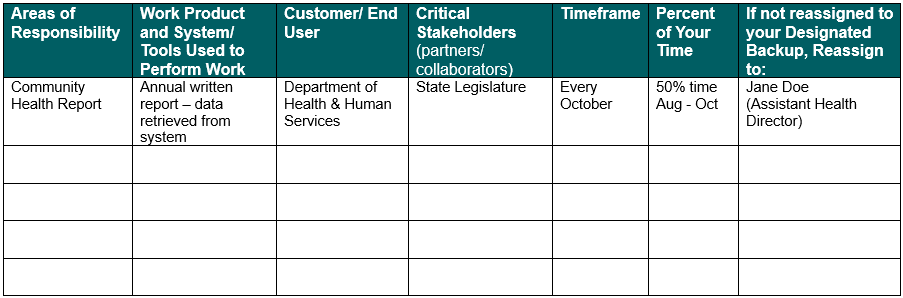
Current Incumbents Identify Key Duties and Activities that will Require Coverage (e.g., Major Outputs, Key Decisions, Tasks Managed, Resources Managed). Start with the higher risk positions identified in Step 1 and move to moderate and low risk positions over time.
Example: Key Duties and Activities for Health Promotion Manager